The Benefits of Outdoor Education Go Beyond the Classroom
The benefits of outdoor education become clear when students step outside the classroom and into situations where learning is something they experience rather than simply read about.
A classroom can teach a student many things. But there are some lessons that become clearer when the classroom disappears.
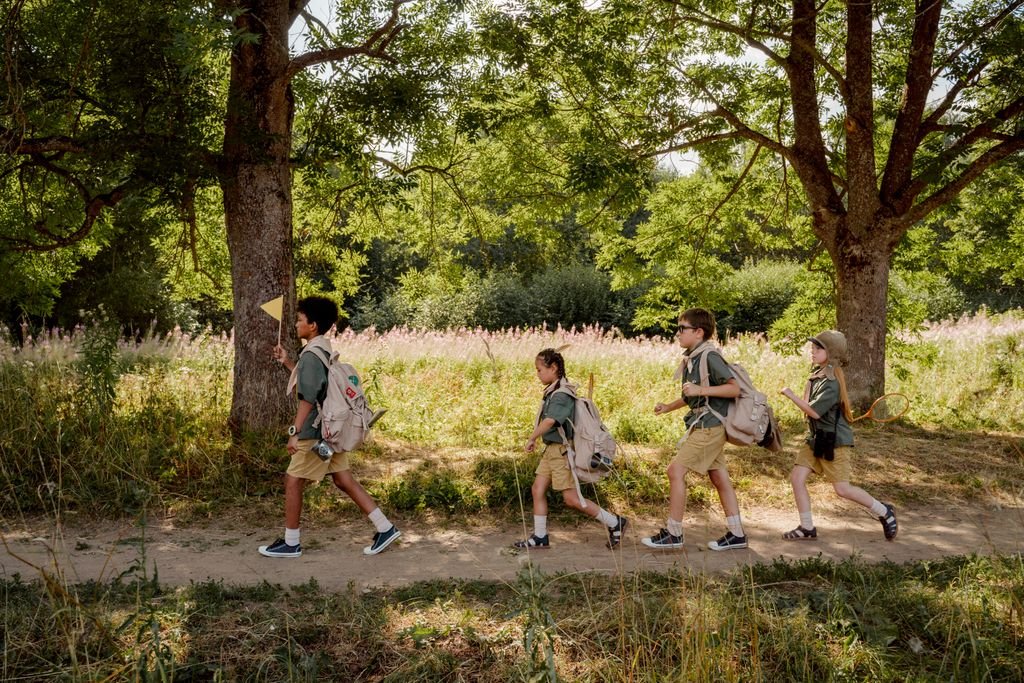
When a group of students walks together through a forest, finds its way along an unfamiliar trail, works through a difficult climb, or simply spends a few days away from the routines of everyday life, learning begins to take a different form.
There is no textbook telling them what to do next. They have to observe, communicate, make decisions, help one another, and sometimes be comfortable with not knowing exactly what comes next.
That is where outdoor education becomes meaningful.
Outdoor education programs are not simply about taking students outside for a few days. At their best, they create experiences where students can discover things about themselves and each other that are difficult to experience within the four walls of a classroom.
Learning through experience
Much of what we learn in school is structured around information. Outdoor learning adds something different: experience.
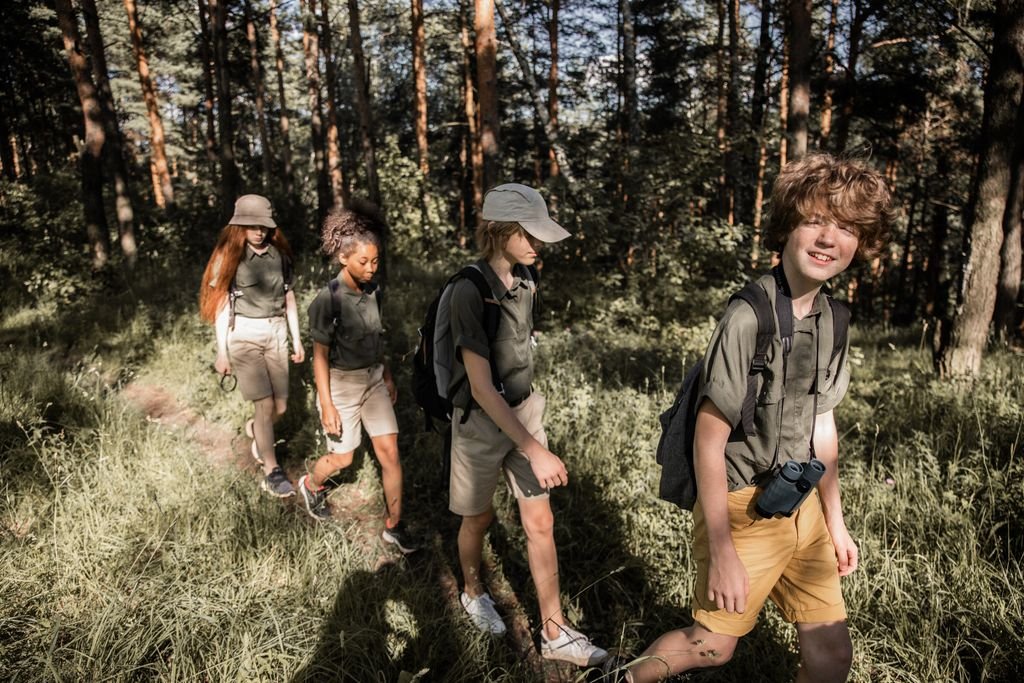
A student may understand the importance of teamwork when it is explained in a classroom. It becomes something else when a group has to cross a difficult section of a trail together, decide how to approach a challenge, or wait for someone who is struggling behind.
The lesson is no longer theoretical.
It is something they have lived through.
This is one of the reasons experiential learning can stay with students long after an outdoor programme has ended. They remember the place, the people they were with, the difficulty they overcame and, often, the moment when they realised they were capable of more than they had expected.
Confidence grows through small challenges
Confidence rarely appears all at once.
It is built through small decisions and small moments of uncertainty.
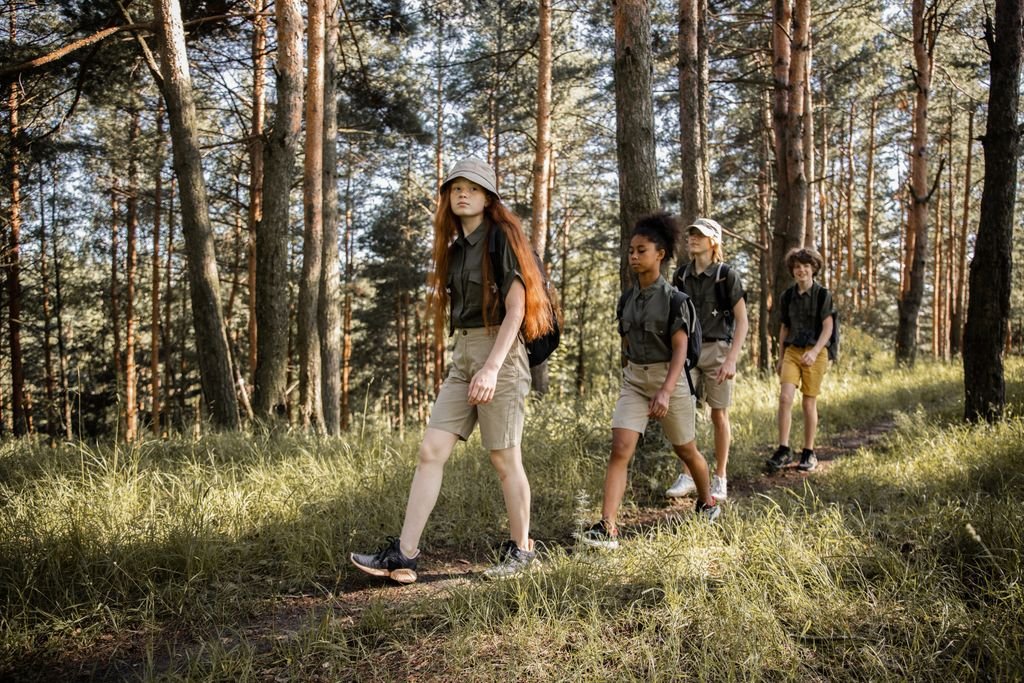
For one student, it may be the first time walking a longer trail. For another, it may be speaking up when a group has to make a decision. Someone else may discover that they can encourage a friend who is finding the experience difficult.
Outdoor environments naturally create these moments.
The aim is not to make every experience difficult. It is to create challenges that are meaningful, appropriate to the group and supported by experienced leaders.
When students are given enough space to try, make mistakes, adjust and try again, confidence becomes something they experience rather than something they are simply told to have.
Leadership is more than being in charge
Outdoor experiences also change the way students understand leadership.
Leadership is not always about being the loudest person in a group or making every decision. Sometimes it means listening carefully. Sometimes it means noticing that someone has been left behind. Sometimes it means accepting that another person’s idea is better.
A well-designed outdoor programme gives students opportunities to experience these different forms of leadership.
They learn that a group moves forward not because one person controls it, but because people communicate, take responsibility and look out for one another.
These are lessons that have value far beyond the programme itself.
Learning to work with one another
Put a group of students in an unfamiliar environment and the dynamics of the group often become more visible.
Some naturally take initiative. Some observe quietly. Some are good at solving practical problems.
Others are better at keeping the group together when things become difficult.
Outdoor activities give these different strengths room to emerge.
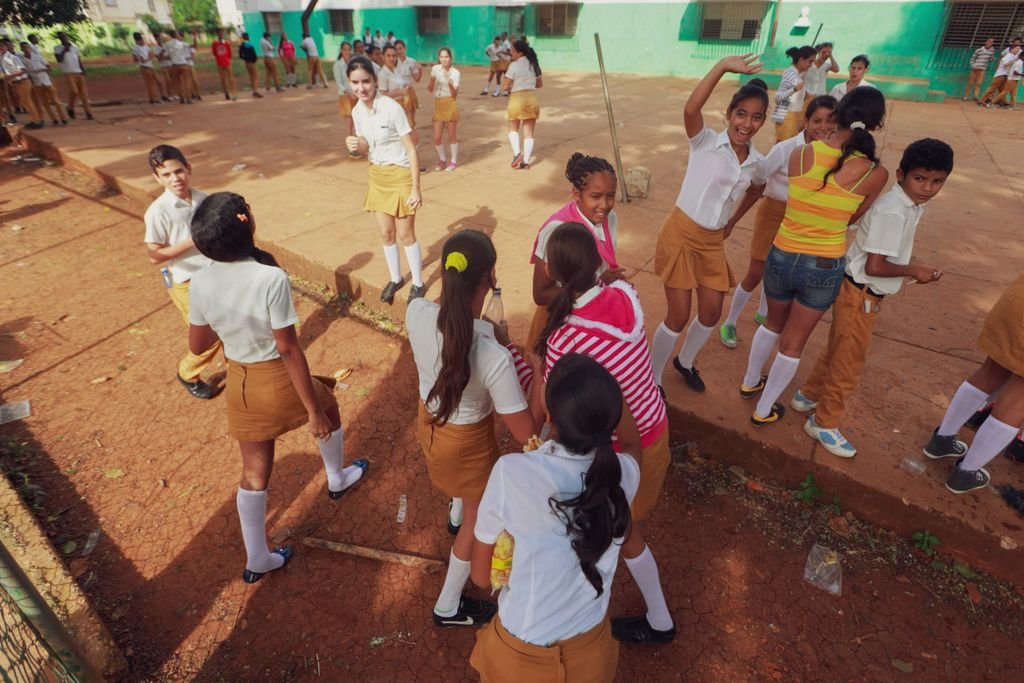
A shared experience can also break down familiar roles. The student who is usually quiet in the classroom may become the one helping everyone navigate. The student who is confident academically may discover that someone else has skills they had never noticed before.
This is where outdoor education can contribute to genuine teamwork.
Not through a lecture about teamwork, but through situations where teamwork actually matters.
A different relationship with nature
There is another lesson that is becoming increasingly important: learning to pay attention to the natural world.
Spending time outdoors gives students an opportunity to experience landscapes rather than simply seeing photographs of them.
They notice the weather changing. They begin to recognise different trees and plants. They hear sounds that disappear in the noise of a city. They understand that a mountain, forest or river is not simply a backdrop for an activity.
It is an environment with its own rhythm and limitations.
That experience can gradually develop something more valuable than knowledge alone: respect.
And when young people develop a relationship with nature, environmental responsibility becomes less abstract. It becomes connected to something they have actually experienced.
The value of being away from routine
Modern childhood is increasingly structured.
School, tuition, screens, schedules, notifications and constant connectivity leave very little room for simply being somewhere without having to move immediately to the next thing.
Time outdoors creates a different rhythm.
There is walking. There are conversations. There are periods of silence. There are shared meals, unfamiliar surroundings and evenings without the usual routines.
For a few days, students can experience what it means to slow down and pay attention.
That pause matters.
Sometimes stepping away from the familiar is what allows us to see ourselves and the people around us a little more clearly.
What makes a meaningful outdoor education programme?
Taking students outdoors does not automatically create meaningful learning.
The experience needs thought behind it.
A good outdoor education programme begins by understanding the students, the institution and what the programme is intended to achieve. The location, activities, duration, group size, difficulty and learning outcomes should all work together.
Safety is equally important.
Students should be challenged, but they should also be supported. Outdoor learning should introduce uncertainty without creating unnecessary risk. Experienced leaders, careful planning, appropriate equipment and clear communication are essential parts of that process.
Most importantly, the experience should leave room for reflection.
Because sometimes the most valuable part of an outdoor programme is not the activity itself, but the conversation afterwards.
What was difficult?
What did you notice?
What would you do differently?
Who helped you?
What did you discover about yourself?
These questions turn an experience into learning.
Beyond the classroom
The outdoors cannot replace the classroom, and it does not need to.
The two can complement each other.
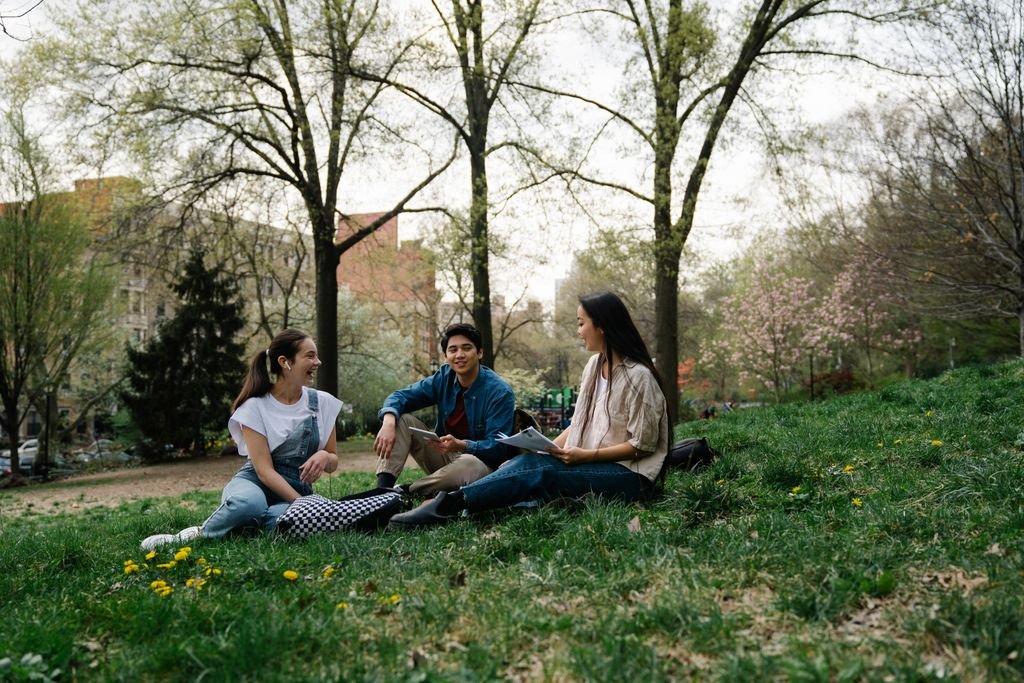
A classroom provides knowledge, structure and ideas. The outdoors gives students opportunities to test those ideas through experience, uncertainty and interaction.
A student may learn about leadership in school and then experience what leadership actually demands on a trail.
They may learn about ecosystems and then spend time observing one.
They may study communication and then discover how important it becomes when a group has to make a decision together.
That is why outdoor education matters.
The goal is not simply to take students somewhere beautiful.
It is to give them experiences that stay with them when they return home.
At Heart in Himalaya, we believe the outdoors can become one of the world’s greatest classrooms when experiences are designed with purpose, care and enough space for students to discover things for themselves.
Because some lessons are understood best when they are lived.