How to Prepare for Your First Himalayan Trek
A first Himalayan trek can seem intimidating when you start looking at photographs of high passes, long trails and people carrying large backpacks through the mountains. But you don’t need to be an experienced mountaineer to begin. What matters more is choosing a trek that matches your current fitness and experience, and then preparing consistently rather than trying to get fit in the final few weeks.
Choose the right trek first
One of the biggest mistakes beginners make is choosing a trek because it looks spectacular in photographs. A beautiful trail can still be physically demanding, particularly when altitude, long walking days and changing weather are involved. Before booking anything, look at the total distance, highest altitude, number of days, daily walking hours, elevation gain and the season in which you will be travelling. A shorter trek at a lower altitude may be a much better first experience than immediately choosing one of the more demanding Himalayan routes.
Fitness matters more than speed
You do not need to be exceptionally athletic, but you should be comfortable walking for several hours at a time. Start with regular walking and gradually increase the distance. If possible, include stairs, uphill walks or hikes because Himalayan trails rarely remain flat for long. Strengthening your legs and core can also make long descents and consecutive days of walking considerably easier. The goal isn’t to become the fastest person on the trail; it is to reach the end of each day with enough energy for the next one.
Understand altitude
Altitude is one of the biggest differences between an ordinary hike and Himalayan trekking. As you go higher, the air contains less available oxygen, and your body needs time to adjust. Fitness does not make you immune to altitude sickness, which is why acclimatisation and sensible pacing matter. Do not rush your ascent simply because you feel fine on the first day. Pay attention to how your body feels, stay hydrated, communicate with your guide, and take symptoms seriously rather than treating them as something you simply have to push through.
Pack for the conditions, not the photograph
Mountain weather can change quickly, and temperatures can vary considerably between the daytime and night. Your packing list should depend on the specific trek, season and altitude rather than a generic “trekking essentials” list found online. Good walking shoes, layers that allow you to adapt to changing temperatures, rain protection, a warm layer, basic personal medication, water bottles and sun protection are some of the fundamentals. You don’t need to carry everything you own. A lighter, well-considered backpack is usually far more useful than one filled with things you never use.
Give yourself time to experience the trail
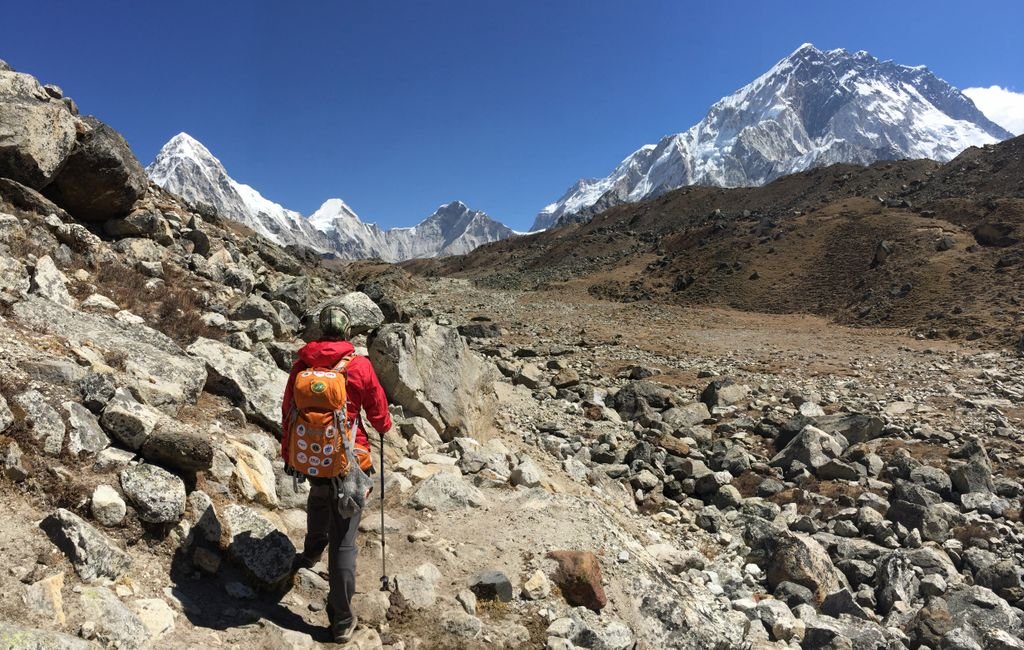
It is easy to become focused on reaching the next campsite, pass or viewpoint and forget that the trail itself is why you came. Himalayan trekking is not only about covering kilometres. The villages, forests, changing landscapes, weather, conversations and quiet stretches of trail are all part of the experience. Walk at a pace that allows you to remain aware of your surroundings, take proper breaks and listen to your guide when conditions change.
If it is your first Himalayan trek, going with an experienced guide can make the experience considerably easier. A good guide brings knowledge of the route and local conditions, but also understands when to slow down, when a plan needs to change and when a participant may need help. That experience becomes particularly valuable in unfamiliar terrain or at higher altitudes.
Respect the mountains
The Himalaya is not simply an adventure playground. It is home to communities, wildlife, forests, rivers and fragile high-altitude environments. Carry your waste back, avoid unnecessary plastic, respect local customs and villages, and leave the trail as you found it. Responsible trekking is not an additional part of the experience; it is part of travelling through these landscapes properly.
Your first trek doesn’t need to be the hardest one. It only needs to be the right one. Choose carefully, prepare steadily, respect the altitude and give yourself enough time to actually experience the mountains. Once you have spent a few days walking through them, you may find that the biggest change isn’t how far you can walk, but how differently you begin to see the landscape around you.